
How to sell your toy brand internationally
 A step-by-step framework for toy and stationery brands ready to grow beyond their home market.
Introduction
Every year, thousands of toy brands sell well at home and then stall. The product is proven. The reviews are strong. The margins work. But crossing into international markets feels like starting from scratch — different buyers, different trade shows, different pricing expectations, different regulatory requirements.
The good news: international expansion for toy brands is far more structured than it looks from the outside. The same routes to market exist in nearly every territory, the same trade shows connect manufacturers to buyers worldwide, and the fundamentals of a good distributor relationship are universal.
This guide walks you through the full process — from choosing your first markets to signing your first international distribution agreements — drawing on over a decade of experience opening Europe and Asia-Pacific markets for toy and stationery brands.
Step 1: Decide Which Markets to Enter First
The most common mistake is trying to enter too many markets at once. Focus beats breadth, especially in the first two years of international expansion.
When selecting your initial markets, consider four factors:
- Market size and toy spending per capita — Germany, the UK, France, Japan, and Australia consistently rank among the world’s highest-spending toy markets per child.
- Proximity to existing demand signals — if you already receive inbound enquiries from a specific country, that is a strong indicator of organic demand worth pursuing.
- Regulatory complexity — some markets (particularly the EU, Japan, and Australia) have specific toy safety certifications required for retail listing. Factor in the time and cost of compliance.
- Distributor availability — a good product without a good distribution partner rarely succeeds. Some markets have a deep, competitive distributor landscape; others are dominated by one or two players.
A practical starting point: choose one market in Europe (Germany or France are strong first choices for most toy categories) and one in Asia-Pacific (Australia is often easiest for English-language brands; Japan rewards brands with patience and the right local partner).
Step 2: Understand the Routes to Market
International toy distribution follows three primary models:
Direct to Retail
You negotiate directly with retailers — supermarket chains, specialist toy retailers, or department stores. This offers the highest margin but requires significant local presence, language capability, and the ability to manage logistics across borders. It works best once you have established brand recognition in a market.
Working with a Distributor
A distributor buys your products outright at a wholesale price and resells them to retailers in their territory. You receive a single invoice, and the distributor handles local warehousing, sales calls, and often marketing. The trade-off is margin: distributors typically buy at 30–45% of the recommended retail price.
Working with a Sales Agent
A sales agent represents your brand in a territory on a commission-only basis — typically 10–15% of net sales. Unlike a distributor, an agent does not buy your stock; instead, they introduce your product to buyers, negotiate on your behalf, and manage relationships. You invoice the retailer directly and retain more control over pricing and brand presentation. For smaller brands, a commission-only agent is often the lower-risk entry point, since there is no upfront cost to activate a new territory.
Konomocha operates as a commission-only international sales agent, which means you pay nothing until sales are generated.
Step 3: Prepare Your Product for International Markets
Before approaching any buyer or distributor, your product needs to be internationally ready. This means:
Safety Certifications
The EU requires CE marking for toys under the EU Toy Safety Directive. The UK has its own UKCA mark post-Brexit. Australia requires compliance with AS/NZS 8124. Japan has the ST (Safety Toy) mark for voluntary certification, and many major retailers require it. Budget 6–12 weeks and £500–£3,000 per product for certification depending on category.
Packaging Localisation
Packaging must include the language of the target market in most jurisdictions. At minimum, safety warnings and age grading must be translated. Many brands create a multi-language master carton to reduce complexity.
Pricing Architecture
Work backwards from the recommended retail price in the target market. Deduct typical retailer margin (40–55%), distributor or agent margin (10–15% commission, or 35–45% if selling to a distributor), freight and duty, and your own cost of goods. If the resulting margin does not work at the volume you can realistically achieve, revisit your cost base before entering that market.
Digital Assets
Buyers at international trade shows and distributors evaluating your brand will want a professional digital sell-in pack: high-resolution product photography, a line list with RRPs and trade prices, a product video if available, and a one-page brand overview.
Step 4: Go to the Right Trade Shows
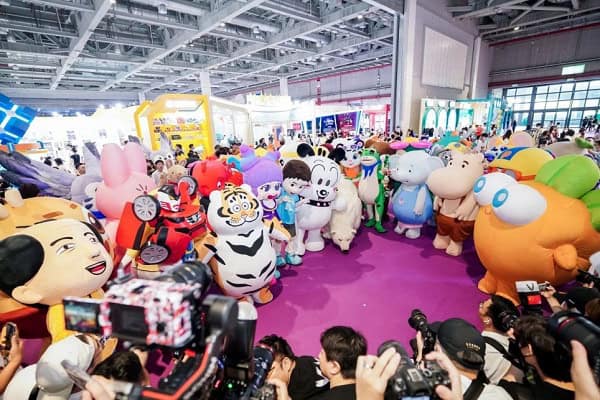
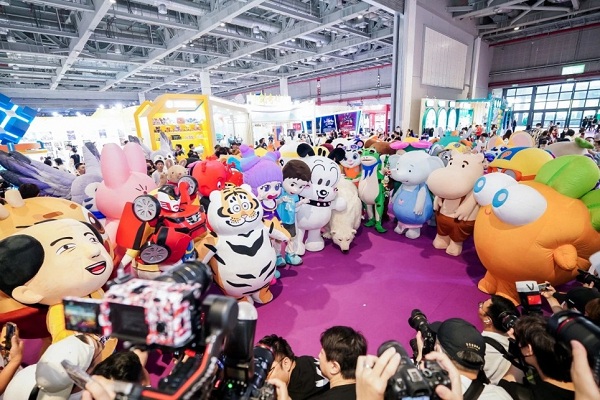
Trade shows remain the single most effective way to open international distribution relationships quickly. The key events for toy brands are:
- Spielwarenmesse, Nuremberg (January/February) — the world’s largest toy fair, attracting 60,000+ visitors from 100+ countries. Essential for any brand targeting European distribution.
- Hong Kong Toy & Games Fair (January) — the primary sourcing and distribution event for Asia-Pacific. Particularly important for accessing buyers from Southeast Asia, Japan, South Korea, and Australasia.
- New York Toy Fair (February) — the primary event for North American market access.
- London Toy Fair (January) — focused on the UK market; important for UK-specific distribution.
- Tokyo Toy Show (June) — essential for the Japanese market specifically.
The difference between exhibiting and exhibiting well is preparation. The most productive stands have pre-arranged appointments with qualified buyers rather than relying on walk-in traffic. A good sales agent will arrange a schedule of meetings before the show opens — this is the single biggest factor in converting trade show attendance into signed distribution agreements.
Step 5: Find the Right Distribution Partners
The distributor or agent you choose in each territory will largely determine your success in that market. Criteria to evaluate:
- Existing portfolio — does their current range complement yours without directly competing? A distributor already selling into the toy departments you want to reach is valuable; one already selling a competing product in your category is a conflict.
- Retail coverage — which retailers do they actually supply? Ask for a list, then verify by checking whether their brands are visible in-store or online in those markets.
- Team size and structure — a one-person operation may be passionate but unable to give your brand the attention it needs. Look for a dedicated sales team covering key accounts.
- References — ask for two or three supplier references and speak to them. Questions to ask: do they pay on time, do they communicate proactively, and do they actually grow accounts over time?
- Territory exclusivity terms — most distributors will ask for exclusivity. Grant it for a defined term (12–24 months) with clear minimum sales targets and the right to terminate if targets are not met.
Step 6: Structure Your Distribution Agreements
A clear written agreement protects both parties and sets expectations before problems arise. The key terms to address:
- Territory — specify countries precisely. ‘Europe’ is not a territory; ‘France, Belgium, Luxembourg, and Switzerland’ is.
- Exclusivity and duration — grant exclusive rights for a defined period tied to minimum purchase or sales commitments.
- Minimum performance requirements — include annual minimum order quantities or sell-through targets with the right to terminate exclusivity if not met.
- Pricing and payment terms — agree on your trade price, the partner’s margin, and payment terms (typically 30–60 days from invoice for established partners).
- Marketing obligations — specify what the distributor commits to: trade show presence, catalogue inclusion, social media activity.
- Termination and stock return — define what happens to unsold stock if the agreement ends.
For most small and medium toy brands, a straightforward 2–4 page distribution or agency agreement is sufficient. Complex legal agreements with unfamiliar overseas partners can delay market entry by months; simplicity and clarity are usually more valuable than exhaustive legal protection.
Step 7: Manage International Accounts for Growth
Opening a market is the beginning, not the end. The brands that succeed internationally treat their international distribution partners as strategic partners rather than passive channels. Practical habits of high-performing international brands:
- Quarterly business reviews — scheduled calls or visits to review sell-through data, discuss upcoming promotions, and plan the next 90 days.
- New product pipeline briefings — give partners early visibility of upcoming launches so they can plan their own sell-in meetings with retailers.
- Marketing co-investment — even modest investment in local marketing (digital ads, influencer seeding, PR) signals commitment to the market and supports the distributor’s sales effort.
- Responsive support — international buyers operate in different time zones and languages. A 48-hour response time for partner enquiries is a minimum standard; 24 hours builds trust faster.
How Konomocha Can Help
Konomocha is a commission-only international sales agent for toy and stationery brands, based in Hong Kong with a network spanning Europe and Asia-Pacific. We handle trade show preparation and appointment scheduling, distributor identification and vetting, account management, and ongoing territory growth — at no upfront cost to you.
If you are a toy or stationery brand looking to open international markets, we would be happy to have a conversation about whether Konomocha is the right partner for your brand.
Contact us at konomocha.com/contact to start the conversation.