What a Toy Sales Agency Is Actually For
Picture the buyer at a m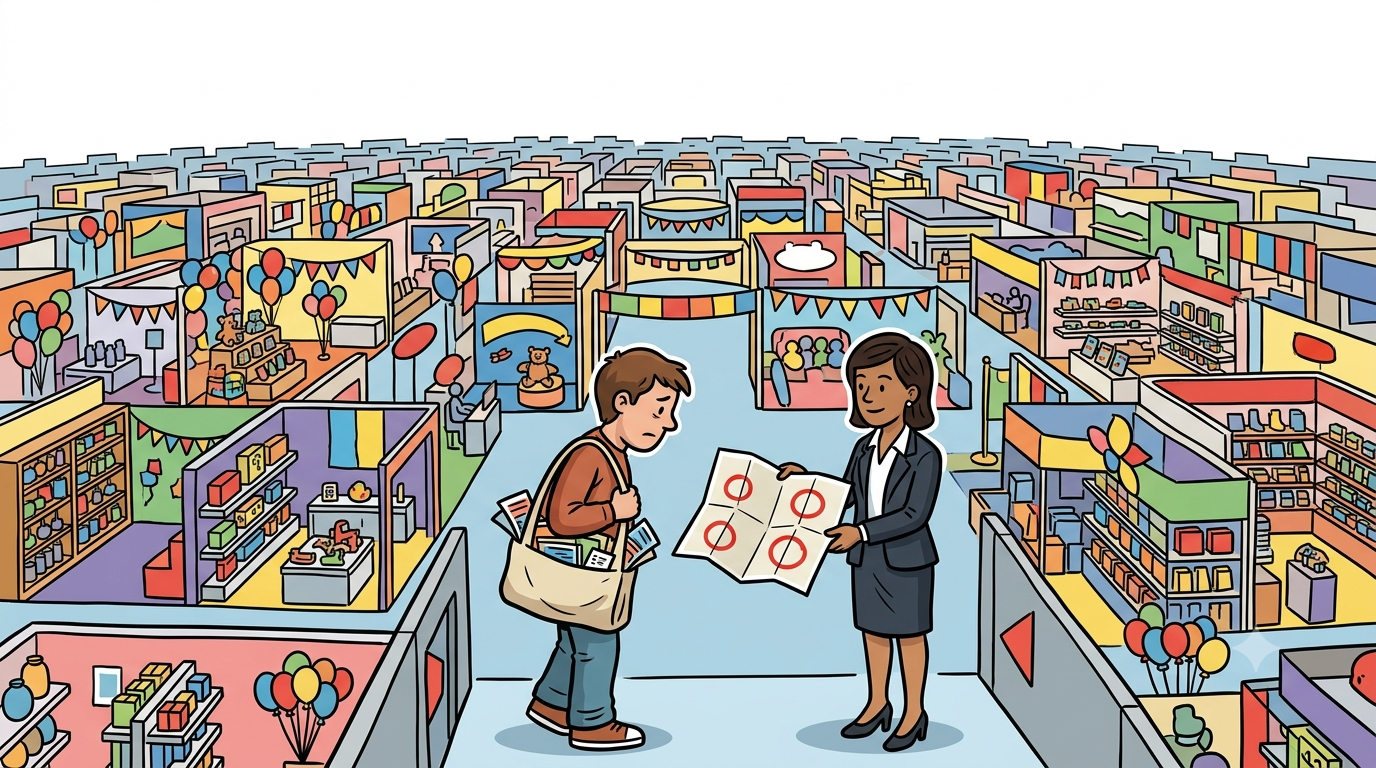 ajor trade show. Three days on a concrete floor, several hundred stands, sore feet by lunchtime on day one. Do the arithmetic and it is bleak. There are not enough hours in the show to see everything properly, so most of it gets a polite glance and a business card that never gets followed up.
That gap, between everything on offer and the little a buyer can actually absorb, is the entire reason a good toy sales agency exists. It has nothing to do with how many lines we carry. If anything, the opposite.
The instinct, when you have a buyer’s attention, is to show them more. Resist it. The job is to show them less, and to be right about the less. A buyer who has learned that the few things you bring are worth their limited time will give you the meeting before they give it to a stand with ten times the product. They are not buying your range. They are buying your judgement, and your judgement is only worth something if you have been disciplined about it for years.
That discipline is unglamorous and largely invisible. It mostly consists of saying no. No to good products that are wrong for a territory. No to strong lines that sit at the wrong price for the buyer in front of you. No, sometimes, to things you personally love but cannot honestly place. Every one of those noes is protecting the yes that matters, because the fastest way to lose a buyer’s trust is to waste one meeting on a weak line. Show them one dud and the next ten get a quicker refusal.
This is the part of representation that rarely makes it into the conversation. It is not the deal-making or the launch night. It is the quiet, repeated act of standing between a brand and a buyer and being honest with both about whether they belong together. Get that right consistently and you become the call a buyer takes when their diary is full and their feet hurt.
The brands that travel are not always the loudest in the hall. More often they are the ones put in front of the right person, by someone that person has reason to believe. In a crowded room with a ticking clock, that is not a small advantage. It is the whole game.